The holiday season is behind us, and in its wake, we are most likely out of sync with any good habits or routines. Travel, family events, irregular schedules and a seemingly endless supply of cakes, pies and other delectable goodies have given many of us (me included) plenty of excuses for not making good choices. Don't get me wrong, I love this time of year. I see lots of family and friends. We eat and drink and generally have a good time. I don't even think that this unmindful splurge once a year is a bad thing, so long as you do let the splurging become a habit that persists into the new year. Here are a few ideas for getting back on track in the new year.
1) Spend some time with your goals. Set aside a block of time (at least an hour) and write down what you want to accomplish in the coming weeks, months and years. What are you already doing to see these goals happen? What can you start doing? Are you doing anything to hinder your progress? Be open and honest with yourself. Tell others close to you about your goals. Write them down and put them somewhere where you will see them daily.
2) Surround yourself with good things. If you are eating too much cake, don't have cake in your house. If you want to do kettle bells daily, have a kettle bell in your office or living room or both. Proximity to whatever you are trying to do lowers the barrier to getting it done. On the flip side, I have never once gotten in my car and driven to the store because I was craving cake. But if it's sitting in front of me I'll eat it all day.
3) Get out of your comfort zone. There is no better time to try new things than the start of a new year. New foods, new activities, new habits.
Getting better starts with you making a choice and taking action. Make 2013 a year of growth, betterment and success. Start today.
Jack.
PS - I am about as guilty as it gets when it come to falling off the "better every day wagon." My lack of holiday self control can be summed up in one meal. I woke up, went to the gym for a great workout, came home and ate a healthy meal of lean meat and veggies. Then I saw the coconut cake sitting in the fridge. And I ate not one but two large slices and proceeded to take a nap. Curse you, coconut cake!
KBs
Thursday, January 3, 2013
Thursday, December 13, 2012
Off the Wagon for the Holidays
It is that time of year. The family comes to town. Its cold and nasty outside. Shopping needs to be done. You are busy. Translation: it is more than likely that this is the time of year when people put their health on the back burner. Its the most wonderful time for making excuses.
Now it may seem like I'm about to go all Grinch plus Jillian Michaels, but hang with me. I am just as guilty of this holiday ritual of ditching my routine, not being active and make poor food choices. The phenomenon is magnified when the rest of the family is in cahoots. Meals are planned, errands are tasked, general over planning takes effect. It seems like the whole holiday season is designed to disrupt even the most determined quest for betterment.
So what are we to do? Are we destined to succumb to wintry setback every year? Is this why we make New Year's resolutions? To signify the end of this multi-week bender of laziness and overeating? I have a better idea.
Here are some ideas that should help keep you (and your family) active and healthy throughout this busy season:
Jack
PS - Do any of you have favorite holiday traditions that involve family activities? We do a Christmas morning walk every year. Its not the most demanding of exercises but it is something and we do it together. Easy as that.
Now it may seem like I'm about to go all Grinch plus Jillian Michaels, but hang with me. I am just as guilty of this holiday ritual of ditching my routine, not being active and make poor food choices. The phenomenon is magnified when the rest of the family is in cahoots. Meals are planned, errands are tasked, general over planning takes effect. It seems like the whole holiday season is designed to disrupt even the most determined quest for betterment.
So what are we to do? Are we destined to succumb to wintry setback every year? Is this why we make New Year's resolutions? To signify the end of this multi-week bender of laziness and overeating? I have a better idea.
Here are some ideas that should help keep you (and your family) active and healthy throughout this busy season:
- Short term Goals - Set up small, daily activities for yourself. This can be anything from a walk or run every morning or a set of push ups when you wake up to a scheduled full on workout every day. Make a plan for staying active.
- Mix family time and active time - You aren't the only one who needs to move. Your family and friends are just as busy as you. Make them a part of your plan. Go on group walks. Workout together, kids and adults. My family has started doing this and it is a great bonding experience and you feel better afterward. Everybody wins.
- Upgrade your Trough - The numerous big meals that occur this time of year can really throw us off our game. Everyone knows about the food coma that inevitably happens after each big meal. It is here that we need to improve our choices. Replace one of any of the half dozen casseroles with vegetables. Offer to plan and prepare one healthy meal. Limit yourself to one night of binging on Nog-based adult beverages.
Jack
PS - Do any of you have favorite holiday traditions that involve family activities? We do a Christmas morning walk every year. Its not the most demanding of exercises but it is something and we do it together. Easy as that.
(Not me)
Thursday, December 6, 2012
Use your Fear
If you say you don't have fear in your life, you are a liar. Fear is perhaps the most basic and primal of human emotions. It is felt and expressed in all kinds of ways throughout our lives, from near misses in traffic to runs ins with wild animals. Fear steers us away from harm. It keeps us focused on dangerous tasks. Without fear, the human race would have died long ago because we didn't know to avoid lions and bears.
So what does this have to do with getting better, you ask? Good question. It seems that most of us let fear guide our actions without ever really being acknowledged. Our fear controls us instead of us controlling our fear. I propose that we become the masters of our fear. This starts by acknowledging things that scare us and then facing those things. If you fear heights, go sky diving. If dogs scare you, find a friend with a friendly dog and hang out with said dog. If the idea of letting your teenage child get behind the wheel is terrifying, take them to a high performance driving school and give them skill and confidence as a driver.
Once we start owning our fears, we realize that they aren't crippling. They are valid, rational fears. Heights can be dangerous, but you are more likely to die in a car crash driving to the drop zone than on the actual skydive. Wild or rabid dogs (or wolves) can also do serious harm. But bad dogs are few and far between. Also, dogs can "smell" or sense fear. So be cool and most dogs will do the same. And you should be worried about putting your kids behind the wheel. The road can be a dangerous place, but making sure that young drivers are prepared for anything behind the wheel can alleviate some of your worries.
So whatever scares you, figure it out and face it. You will be amazed how much confidence you gain.
Jack
PS - I spent the last few days jumping out of planes. This evokes fear in me no matter how many times I do it but it is not negative, debilitating fear. Instead, it is an awareness that I am doing something risky that requires 100% focus. If my pulse didn't quicken before jumping out at twelve thousand feet, then I would be scared.
So what does this have to do with getting better, you ask? Good question. It seems that most of us let fear guide our actions without ever really being acknowledged. Our fear controls us instead of us controlling our fear. I propose that we become the masters of our fear. This starts by acknowledging things that scare us and then facing those things. If you fear heights, go sky diving. If dogs scare you, find a friend with a friendly dog and hang out with said dog. If the idea of letting your teenage child get behind the wheel is terrifying, take them to a high performance driving school and give them skill and confidence as a driver.
Once we start owning our fears, we realize that they aren't crippling. They are valid, rational fears. Heights can be dangerous, but you are more likely to die in a car crash driving to the drop zone than on the actual skydive. Wild or rabid dogs (or wolves) can also do serious harm. But bad dogs are few and far between. Also, dogs can "smell" or sense fear. So be cool and most dogs will do the same. And you should be worried about putting your kids behind the wheel. The road can be a dangerous place, but making sure that young drivers are prepared for anything behind the wheel can alleviate some of your worries.
So whatever scares you, figure it out and face it. You will be amazed how much confidence you gain.
Jack
PS - I spent the last few days jumping out of planes. This evokes fear in me no matter how many times I do it but it is not negative, debilitating fear. Instead, it is an awareness that I am doing something risky that requires 100% focus. If my pulse didn't quicken before jumping out at twelve thousand feet, then I would be scared.
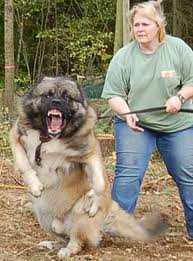
Maybe don't play with this dog. . .
Monday, November 26, 2012
Jump
When was the last time you jumped? For most people it's probably been awhile. We just don't jump in our everyday lives. We walk, run, lift, push, pull, squat and throw but we never jump. So why would we want or need to jump? How will jumping make us better? Our ability to rapidly open our hips and put distance between us and the ground is a basic human action. It requires a coordinated effort between your upper body, hips, knees and ankles. It can also be a daunting prospect for those non-jumpers out there. You are leaving the planet at high speed. Confidence is required for a successful jump. Why? Because you also have to land.
Here are some jumping exercises to work into your routine:
Jack
PS - Don't forget to exercise caution when jumping: spot your landing and make sure that if you fall, it is on relatively forgiving terrain. No sense in marring your pretty face in the name of jumping.
Here are some jumping exercises to work into your routine:
- Jumping Squats - From a half squat, explode up and jump as high as you can. Land in the half squat and immediately jump again. These can be done Tabata, on the minute or as part of a larger workout.
- Broad Jump - From a standing position, quickly squat down and swing your arms down and back for momentum. Explode forward and jump as far as you can. Land in a balanced squat. Measure your jumps and see if you can increase your distance.
- Jump Rope - This is something most of us did as kids. Work on increasing pace and accuracy (how long you can go without missing). If you are getting bored with regular jumps you can start practising. . .
- Double Unders - These are just like jumping regular rope, only the rope is passing under your feet twice per jump instead of once. This requires a bigger jump, faster hand speed and significantly more cardiovascular endurance. Few things increase heart rate as fast as a series of double unders.
- Box Jumps - Start with a small box (or park bench or low wall, etc.). Standing in front of said box, jump up and land in a squat on top of the box. Stand up straight, then jump or step back down. You can either find a height that you can jump dozens of times as part of your workout or you can challenge yourself to find the maximum height you can jump.
- Soft Landing - Get on top of your box. Jump off and land as softly and quietly as you can. The point of this is to practise landing with as little impact as possible. Use your legs like shock absorbers.
- Spin Jumps - From a half squat, jump and spin 180 degrees, landing in a half squat. Do this both ways. If you can, try a 360 degree jump or more, always landing in a balanced half squat.
Jack
PS - Don't forget to exercise caution when jumping: spot your landing and make sure that if you fall, it is on relatively forgiving terrain. No sense in marring your pretty face in the name of jumping.
Thursday, November 15, 2012
The Kettlebell
The time has come. That's right - it's time to talk about the my favorite tool, the Kettlebell. First, a little background. The kettlebell first appeared in Russian marketplaces in the 1700s as a unit of measure for weighing grains. The pood (one unit of measure) is approximately 36lbs. These weights had handles for ease of use and transport and soon people (Russian peasant farmers) started throwing them around to show their strength and prowess. This turned into competition and, in the last 100 years, even kettlebell as a sport in itself. But enough history. What does one do with this thing? Here are some of my favorite exercises:
I like the KB because it is small, simple and brutally effective. If your are looking for a cheap home gym, look no further. I let my creativity take over to make up new moves and workouts. Keep checking back for new ideas.
Jack
PS - When you are tossing around the KB, it is important to know your surroundings. You will eventually drop it and a flying cannonball with a handle is not very friendly to things like your feet, windows, walls and cat. I prefer to be outside so I can really toss the KB with reckless abandon. I've dropped my 35lb KB in my 3rd floor apartment and thought it was going to rocket through my downstairs neighbor's ceiling. Be careful.
- Farmer's Carry - Pick up your KB/s like a suitcase and walk. Walk laps, hills, or stairs. Keep your shoulders pulled back and chest up.
- Swing - The base of most other KB movements. This can be done with either one or both hands. Grab the KB and swing to either chest level or overhead. This video should help with getting started. http://www.maximizedlivingdrhedges.com/exercise-of-the-week-kettle-bell-swing-exercise
- Orbits - I like to use this to wake up in the morning or as a pre workout warmup. Pick your KB up like a suitcase and start to pass it around your waist. You can change hands either at your 12 and 6 o'clock or your 3 and 9 o'clock.
- Throws - You will need to be outside for this. Find an empty piece of grass or sand. The goal is to throw the KB as far as possible. You can throw it any way you can think of, be it over head, like a shot put or with a spinning motion like a discus. All throws generate power. Power is a good thing.
- Turkish Getup - Maybe the most demanding single movement I've done. Start with a lighter weight and perfect your form. This video is a good intro to the move. http://www.performbetter.com/webapp/wcs/stores/servlet/PBOnePieceView?storeId=10151&catalogId=10751&languageId=-1&pagename=203
I like the KB because it is small, simple and brutally effective. If your are looking for a cheap home gym, look no further. I let my creativity take over to make up new moves and workouts. Keep checking back for new ideas.
Jack
PS - When you are tossing around the KB, it is important to know your surroundings. You will eventually drop it and a flying cannonball with a handle is not very friendly to things like your feet, windows, walls and cat. I prefer to be outside so I can really toss the KB with reckless abandon. I've dropped my 35lb KB in my 3rd floor apartment and thought it was going to rocket through my downstairs neighbor's ceiling. Be careful.
Thursday, November 8, 2012
Habits
We all have them. When we sleep, when we wake, when (and what) we eat, when we move, when we rest, when we're in front of a screen and when we're outside. Our lives are basically a series of good and bad habits.
With this in mind, I took a few minutes the other day to write down as many of my habits as I could. I didn't label them good or bad, I just thought of things that I do regularly and how and why I do them. Then I made a list of habits I wanted to stop and another of habits I wanted to start. I looked at them both and thought about where I could add a habit; if my habits were daily, weekly, monthly or yearly; if they were things I do solo or with friends and/or family and if they improved or degraded my health, happiness sleep or attitude.
This was my habits list:
Jack
PS - One of my favorite habit ideas comes from my uncle. He gets up every day and tells himself "I feel great and I'm going to have a great day." While this is not true every day it is a great step toward getting there.
With this in mind, I took a few minutes the other day to write down as many of my habits as I could. I didn't label them good or bad, I just thought of things that I do regularly and how and why I do them. Then I made a list of habits I wanted to stop and another of habits I wanted to start. I looked at them both and thought about where I could add a habit; if my habits were daily, weekly, monthly or yearly; if they were things I do solo or with friends and/or family and if they improved or degraded my health, happiness sleep or attitude.
This was my habits list:
- Wake up at 6:30 am
- Breakfast: one cup black coffee with coconut sugar and grass fed butter, two fried eggs, 2 strips of bacon, one apple and a glass of water
- Something to get my heart rate up: Kettle bell swings, pull ups, stationary bike, yoga, etc. Usually no more than 5 minutes.
- Shower, shave, brush teeth, get dressed, go to work
- Eat snacks (nuts, fruit, jerky) throughout the day
- Hard workout or recovery for about an hour after work
- Shower, make dinner, eat, watch a movie
- Go to sleep around 10:30 in a dark room with no TV (I live in a noisy neighborhood so I use an ambient noise machine)
- Saturday: try new activities and take care of big errands.
- Sunday: farmer's market day, which includes fish tacos, a coconut peanut butter coffee drink called the Mainlander and shopping for fresh food for the week before heading home to watch football, exercise and cook salmon pasta.
- More veggies for breakfast and lunch
- Do a longer and more consistent morning exercise
- Sit down less at work and when I get home
- Hydrate more regularly throughout the day instead of drinking a lot of water in the morning and then not enough at night or vice versa
- Stop falling asleep while watching TV (not good)
Jack
PS - One of my favorite habit ideas comes from my uncle. He gets up every day and tells himself "I feel great and I'm going to have a great day." While this is not true every day it is a great step toward getting there.
Thursday, November 1, 2012
Navigate
If you are like me, navigation and sense of direction do not come naturally. I remember the first time I drove by myself at age 15. My 10 year old brother and I pulled out of the driveway, onto the street, at which point I said ". . . do you know how to get to the movie theater?" I had been going to that theater for years but I had never paid attention to the route. My brother knew the way.
The point is not how bad I am with directions. My point is this is a skill that needs to be practiced and challenged regularly. That day was when I realized I was bad with directions. Now I actively seek situations where I have to navigate, either on foot, in a car, on public transit or any other way. This has ended up with me lost. Frequently. This has also led to me finding some pretty awesome places. Either result, the challenge of navigating something new is good for the brain. Here are some ways to work navigating into your routine:
Jack
PS - I still get lost from time to time. I led a group of buddies astray for about an hour at night in the desert. I ended up wandering around a rural northern Italy for 18 hours before I stumbled upon a creepy, scooby doo-esque mansion hotel on top of a hill at 2am. In most cases, getting lost is a good experience with valuable lessons learned. Sometimes I run with the intention of getting lost and then finding my way back. Nothing like running when you don't know how long you have to run.
The point is not how bad I am with directions. My point is this is a skill that needs to be practiced and challenged regularly. That day was when I realized I was bad with directions. Now I actively seek situations where I have to navigate, either on foot, in a car, on public transit or any other way. This has ended up with me lost. Frequently. This has also led to me finding some pretty awesome places. Either result, the challenge of navigating something new is good for the brain. Here are some ways to work navigating into your routine:
- Move with a purpose - I usually get bored when I go for a walk/run/hike/bike and don't have a reason to do so other than exercise. I like to pick a destination, ie; walk to a yoga studio, run to the store, hike to a scenic mountain top. Try to pick a destination that you usually drive to and walk there instead. If it is only a few miles away, take the time.
- Go somewhere new - We all have our usual stomping grounds. We shop and eat at the usual places. We work out in the same places. With this normal routine the brain can be on autopilot. Every now and then, go somewhere that you haven't been before. It can be a restaurant, a gym, a yoga studio, a park, a store or anything else you've never tried.
- Pick up a map - The skill of reading a map is a lost art. With GPS, we can plug in an address and be guided (usually) to the right location. I am totally guilty of this. But being able to locate yourself and important landmarks on a map is a valuable skill. You could do this in a park, on a bike trail or just around the city. Google maps is fine. I usually pull up a map of where I want to go, do a good map study and then head off with a better idea of where I'm going.
- Lose the wheels - We get so used to driving everywhere. Most of the drives I take are well under ten miles away, which makes it really senseless to drive, especially if I am the only person in a full size pick up truck. I bought a bike yesterday from a guy who hasn't driven his car for over a year. He commutes to work 35 miles every day on his bike. Imagine the gas money saved. And the exercise gained. Also, going on a bike or on foot (or skateboard or roller blades or pogo stick, etc.) makes us more aware of everything around us.
Jack
PS - I still get lost from time to time. I led a group of buddies astray for about an hour at night in the desert. I ended up wandering around a rural northern Italy for 18 hours before I stumbled upon a creepy, scooby doo-esque mansion hotel on top of a hill at 2am. In most cases, getting lost is a good experience with valuable lessons learned. Sometimes I run with the intention of getting lost and then finding my way back. Nothing like running when you don't know how long you have to run.
Subscribe to:
Posts (Atom)